
A monthly budget is a plan for how you will use the money you expect to receive in a given month. It is not a punishment or proof that you are bad with money. It is a practical tool that helps you align spending with priorities, prepare for irregular costs, and reduce financial stress. Whether you are budgeting for the first time or rebuilding a system that stopped working, the process can be broken into manageable steps. This guide explains how to create a monthly budget, from gathering statements to reviewing results at month-end, with methods and adjustments that fit different income patterns.
Why a Monthly Budget Matters
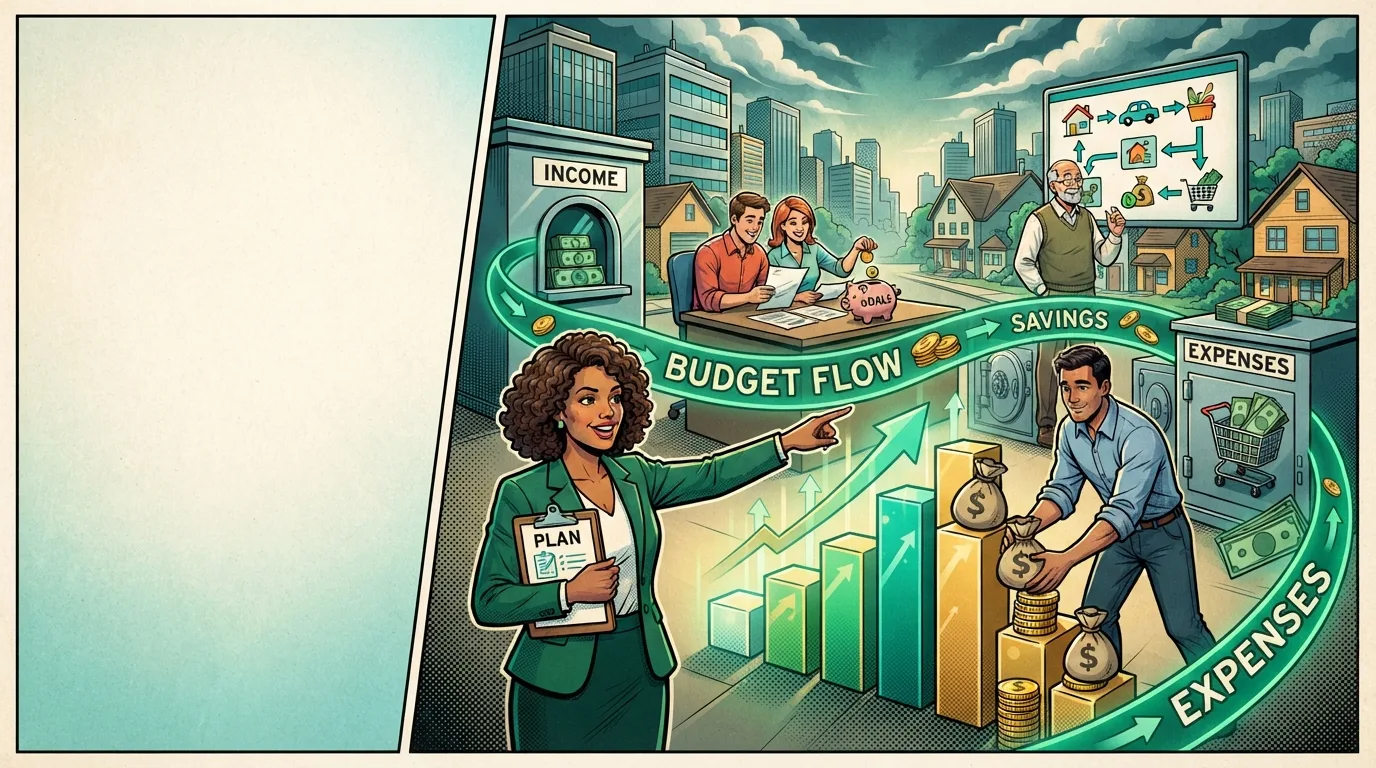
A budget gives you a written picture of what is coming in and what is going out. That picture makes trade-offs visible before you make them, which is often easier than discovering a shortfall after the money is gone. The Federal Reserve’s Report on the Economic Well-Being of U.S. Households has repeatedly found that a substantial share of adults would struggle to cover an unexpected $400 expense without borrowing or selling something. A budget cannot prevent every emergency, but it can help you build a buffer and spot areas where spending can be adjusted.
A realistic budget can help you:
- Cover essential expenses such as housing, food, utilities, insurance, and transportation.
- Set aside money for irregular costs like car repairs, annual insurance premiums, and holidays.
- Pay down debt without relying on new borrowing to cover recurring gaps.
- Build savings gradually, even if the amount starts small.
- Make decisions about spending based on priorities rather than impulse.
A budget is not a one-time exercise. It is a working document that improves as you compare your plan with actual results.
Step 1: Gather Your Financial Data
Accuracy matters more than speed. Before you build categories, collect the records that show where your money actually goes. Looking at two or three months of activity is usually more reliable than estimating from memory.
Gather:
- Recent pay stubs or income statements.
- Bank statements for the last two to three months.
- Credit card statements, if you use cards for regular spending.
- Loan statements, including auto, student, and personal loans.
- Bills for rent or mortgage, utilities, insurance, phone, and subscriptions.
- Receipts or notes for cash spending, which is easy to overlook.
- A list of annual or periodic expenses, such as vehicle registration, tax payments, gifts, and memberships.
If you share finances with a partner, review the numbers together. A budget that only one person understands is less likely to survive real-life changes.
Step 2: Estimate Your Monthly Income
Use the amount you actually receive after taxes and other payroll deductions, not your gross salary. List every regular source: wages, self-employment income, child support, benefits, and reliable side income. If income varies, do not build the budget around your best month.
For irregular income, choose a conservative baseline. One approach is to use the lowest of the last three to six months, then direct any extra income toward savings or debt. Another is to average several months and keep a cash buffer for lower months. Do not count money you have not received unless it is contractually due and dependable.
If you are self-employed, remember that income tax and self-employment tax are not withheld automatically. Set aside an estimated amount for taxes rather than treating all revenue as spendable income.
Step 3: List Every Expense and Separate Needs From Wants
Start with committed expenses, then add flexible spending. Common categories include:
- Housing: rent or mortgage, property tax, renters or homeowners insurance.
- Utilities: electricity, gas, water, internet, phone.
- Food: groceries and household supplies, separated from dining out if possible.
- Transportation: fuel, public transit, parking, insurance, maintenance, registration.
- Debt payments: minimum payments on credit cards, loans, and other obligations.
- Insurance and health care: premiums, prescriptions, co-pays.
- Child care and dependent costs.
- Savings and emergency fund contributions.
- Discretionary spending: streaming services, hobbies, entertainment, personal care.
Include periodic expenses by dividing the annual cost by 12. For example, if vehicle registration and insurance total $1,200 a year, set aside $100 a month. This prevents a predictable annual bill from feeling like an emergency.
A useful distinction is committed versus flexible. Rent is committed; dining out is flexible. Needs are not always fixed, and wants are not automatically wasteful. The goal is to see the full picture and decide consciously.
Step 4: Pick a Budgeting Method That Fits
No single method is universally best. Choose one you can maintain and adjust.
- Zero-based budgeting assigns every dollar of expected income to a category until income minus allocations equals zero. It offers detail and control, but requires regular maintenance.
- The 50/30/20 guideline suggests dividing take-home pay into 50% needs, 30% wants, and 20% savings and debt repayment. It was popularized by Elizabeth Warren and Amelia Warren Tyagi in All Your Worth. It is a starting point, not a rule; high housing costs can make the proportions unrealistic for some households.
- Envelope budgeting sets a limited amount for each spending category, traditionally with cash envelopes or digital sub-accounts. It can help people who overspend in flexible categories.
- Pay-yourself-first budgeting moves savings and debt payments to the top, then plans spending with what remains. It works well for people who struggle to save at the end of the month.
- Priority-based budgeting ranks expenses by importance and funds them in order. It is often useful for irregular or limited income.
Pick a method based on your income pattern, how much detail you want, and whether you prefer cash, cards, or automated transfers. You can combine methods; for example, use pay-yourself-first for savings and envelope limits for dining and entertainment.
Step 5: Balance the Budget: Cut, Shift, or Earn
Compare total planned expenses with expected income. If expenses exceed income, you have three broad options: reduce spending, shift timing, or increase income.
Practical adjustments include:
- Trim flexible categories first, such as dining out, subscriptions, and discretionary shopping.
- Renegotiate recurring bills, including phone, internet, and insurance, where possible.
- Pause or cancel subscriptions you no longer use.
- Delay large purchases until you have saved for them.
- Use a sinking fund for predictable irregular costs instead of relying on credit.
- Add temporary or ongoing income if expenses are already lean.
If you have a surplus, assign it deliberately. Add to an emergency fund, pay extra toward high-interest debt, or save for a specific goal. Avoid leaving surplus unassigned, because unassigned money tends to disappear into everyday spending.
Do not rely on credit to cover a recurring monthly gap. Borrowing can move a problem into the future, but it does not close the gap and may add interest and fees.
Step 6: Put the Plan Into Action and Review It
A budget only works when it is connected to real accounts and real behavior. Automate fixed bills and savings transfers where possible. Use bank alerts for low balances and large transactions. Keep receipts or use a spending app if manual tracking helps you stay aware.
Schedule a short weekly check-in, perhaps 15 minutes, to review spending and upcoming bills. At the end of the month, compare planned versus actual spending by category. Ask three questions:
- Which categories were accurate?
- Which categories were consistently too low or too high?
- What one change would make next month more realistic?
Then adjust the next budget. A budget is not a test you pass or fail; it is a feedback loop. If you overspend in one category, move money from another category or adjust the next month rather than abandoning the plan.
Common Budgeting Mistakes to Avoid
- Setting unrealistic limits that leave no room for normal life.
- Forgetting irregular expenses such as car maintenance, gifts, and annual fees.
- Building the plan around the highest income month instead of a conservative baseline.
- Tracking too many tiny categories and losing the habit.
- Ignoring seasonal income changes or tax obligations.
- Mixing business and personal spending without separation.
- Giving up after one difficult month instead of revising the plan.
A budget should be strict enough to guide decisions and flexible enough to survive reality. If a category fails repeatedly, treat that as information rather than a moral failure.
Tools and Templates
You can build a budget with a spreadsheet, a budgeting app, or a paper worksheet. The Consumer Financial Protection Bureau offers budgeting worksheets and tools, and many banks provide spending summaries that can speed up the tracking process. The best tool is the one you will use consistently.
If you use an app, review its privacy and security practices before linking accounts. A simple spreadsheet with columns for planned and actual spending can be just as effective as a paid tool, especially at the start.
Bottom Line
To create a monthly budget, gather your income and spending records, estimate income conservatively, list all expenses including irregular costs, choose a method that fits your habits, and balance the plan by cutting, shifting, or earning more. Then put the budget into action with automation and a short weekly review. The first version will not be perfect. The value comes from comparing your plan with actual results and making small, realistic adjustments each month. A budget is a tool for directing your money toward what matters, not a restriction to endure.