Choosing the right checking account is less about finding a single best product and more about matching an account’s costs and capabilities to the way you handle money. A checking account is usually the hub for direct deposits, bill payments, debit card purchases, cash withdrawals, and transfers. Because you may use it every week, small differences—a monthly fee, an out-of-network ATM charge, a low balance threshold, or a slow mobile deposit hold—can compound over time. The goal is an account that keeps your everyday money accessible, protects you when something goes wrong, and does not quietly erode your balance with fees. This guide explains how to compare accounts using a repeatable process and which details deserve the closest reading.
Start With How You Actually Use a Checking Account
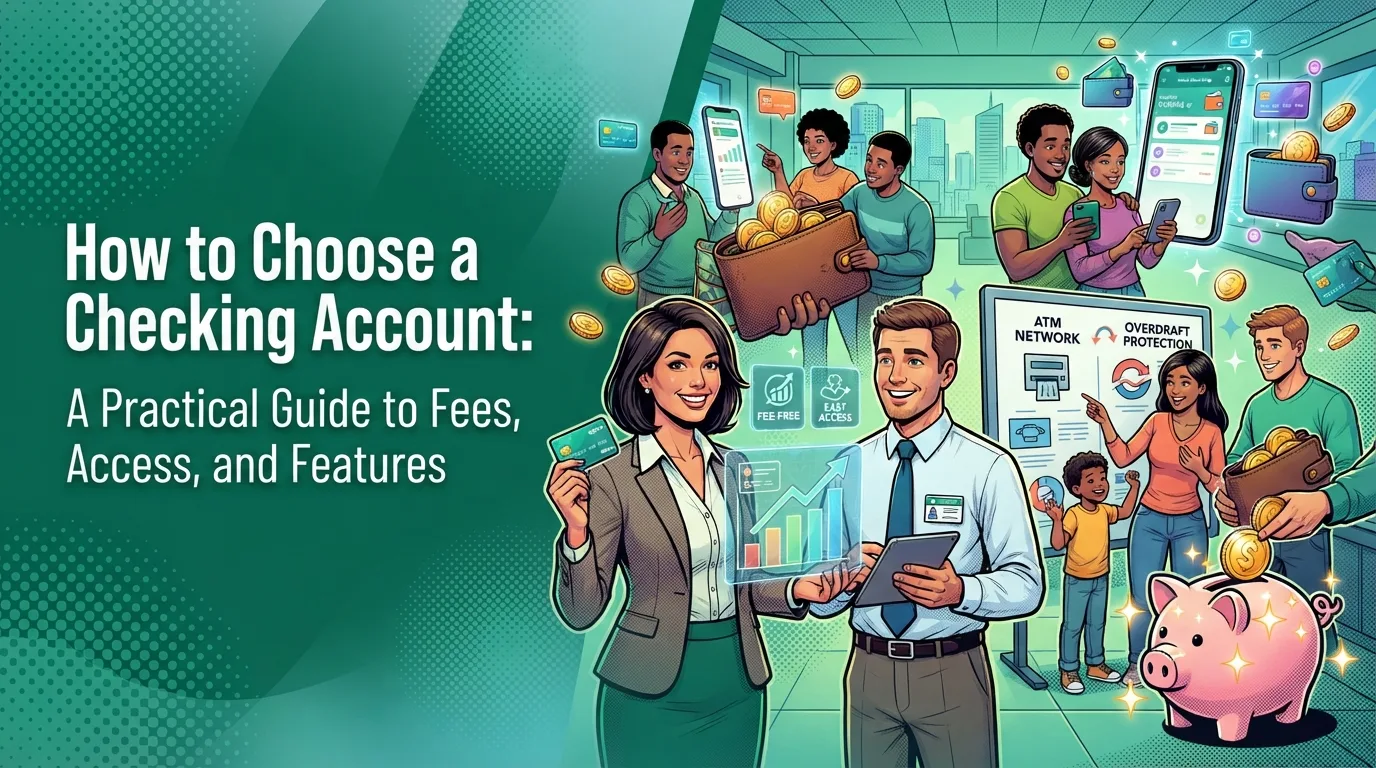
Before you compare APYs or sign-up bonuses, write down how the account will be used. A good checking account for a salaried employee who uses direct deposit and pays bills online may be a poor fit for someone who deposits cash weekly or writes checks to a landlord. Consider these questions:
- How often will you use cash? If you deposit cash frequently, branch or ATM access matters more than a high app rating.
- Do you need a branch for deposits, withdrawals, or problem resolution? Some people rarely visit a branch; others need one nearby.
- Will you write paper checks? Confirm whether checks are free, whether there is a minimum order, and how the bank handles stop payments.
- Do you need joint access or access for a family member? Joint accounts and authorized users have different rules and protections.
- Will you receive direct deposit? Some accounts waive monthly fees or offer early access to pay only with qualifying direct deposit.
- Do you travel internationally? Check foreign transaction fees, card network acceptance, and ATM fees abroad.
- Do you want overdraft coverage or would you rather have transactions declined? Your preference affects which account terms are acceptable.
A useful exercise is to review your last two or three months of statements from your current account. Identify the fees you paid, the ATMs you used, and the deposits that arrived. That history is more reliable than a marketing page.
Compare the True Cost: Fees, Minimums, and Interest
Checking accounts can be inexpensive, but the pricing depends on how you use them. Ask for the account’s fee schedule and read the section on monthly maintenance, balance requirements, and transaction fees. Key costs include:
- Monthly maintenance fee and the exact conditions to waive it, such as a minimum daily balance, a recurring direct deposit, or a certain number of debit card purchases.
- Minimum balance requirements. Some banks use an average daily balance; others use a minimum at statement time. A single low day can trigger a fee at some institutions.
- ATM fees, including the bank’s own surcharge, the out-of-network operator’s fee, and any reimbursement policy.
- Overdraft and nonsufficient-funds fees. Ask whether the bank charges both, whether it offers a grace period, and whether you can opt out of overdraft coverage for debit card and ATM transactions.
- Ancillary fees: paper statements, replacement cards, expedited delivery, wire transfers, cashier’s checks, stop payments, and account closure.
Interest is usually a secondary consideration for a checking account. Many checking accounts pay little or no interest; high-yield savings accounts or money market accounts may pay more. If a checking account advertises a high rate, check the requirements—often a minimum number of debit transactions, e-statements, or a qualifying direct deposit—and confirm whether the rate applies only to a limited balance tier. Do not pay a monthly fee merely to earn a small amount of interest.
Check Access and Convenience: Branches, ATMs, and Digital Tools
Access is about more than the number of branches. Think through the moments when you need money quickly or need to move money accurately:
- Cash deposits and withdrawals. If you deposit cash, a branch or a large ATM network can matter.
- ATM network and reimbursements. Check the map for your home, work, and frequent travel routes. A large network is useful, but a smaller network with unlimited reimbursement may be better if you rarely use cash.
- Mobile check deposit and hold times. A remote deposit limit and a multi-day hold can disrupt your cash flow.
- Bill pay and transfers. Confirm processing times, cut-off times, and whether the bank charges for expedited payments.
- Digital alerts and controls. Low-balance alerts, transaction alerts, card lock controls, and the ability to pause a debit card can help you catch problems early.
- Customer service. Check hours, phone wait times, secure messaging, and whether support is available in your preferred language.
- Accessibility. If you rely on screen readers, large text, or branch assistance, test the app and website before you commit.
Understand Insurance, Security, and Consumer Protections
Confirm that your money will be insured. Banks insured by the Federal Deposit Insurance Corporation generally cover deposits up to $250,000 per depositor, per insured bank, for each ownership category. Credit unions have similar coverage through the National Credit Union Administration. Ownership categories can include single accounts, joint accounts, and certain retirement accounts; the limits are not simply $250,000 per person across every account at every bank. If your balances are near or above the limit, ask the institution how your accounts are titled and consider spreading deposits across institutions or using a deposit placement service.
Security also deserves a checklist. Look for multi-factor authentication, alerts for unusual activity, the ability to freeze a card, and clear instructions for reporting fraud. Debit card transactions are generally covered by the Electronic Fund Transfer Act and Regulation E, but your protection can depend on how quickly you report an unauthorized transfer. Report a lost card or suspicious transaction promptly and keep records. Avoid sharing one-time codes, and be skeptical of messages that pressure you to move money urgently.
Review Overdraft and Deposit Policies Before You Apply
Overdraft and deposit policies can affect your day-to-day balance more than the advertised interest rate. Under federal rules, banks generally must obtain your affirmative consent before charging overdraft fees on ATM and one-time debit card transactions. That means you may be able to decline overdraft coverage for those transactions, although the account could still decline a purchase when funds are insufficient. Ask what happens if you overdraw by check or automatic bill payment, and whether the bank offers a linked savings account or line of credit as an alternative.
Deposit availability is another practical issue. Regulation CC sets general rules for when deposited funds must be available, but banks may place holds on certain deposits, especially new accounts, large checks, or mobile deposits. Ask about:
- The bank’s funds availability policy.
- Hold times for mobile deposits and new-account deposits.
- Daily and monthly mobile deposit limits.
- Whether cash deposits at an ATM post immediately or after a delay.
- Any fee for closing the account, and how to close it without losing the final statement.
Consider Rates, Rewards, and Account Perks—But Read the Fine Print
Rewards checking accounts can be useful, but they often come with conditions that are easy to miss. A headline annual percentage yield may apply only if you meet monthly requirements, such as a set number of debit card purchases, a direct deposit, or paperless statements. Compare the value of the reward with the cost of changing your behavior or paying a fee. Cash-back checking accounts may pay a small percentage on debit purchases, but the amount is usually capped.
Also review account perks that matter to your life: free or discounted checks, an early direct deposit feature, budgeting tools, savings buckets, joint account access, or student and senior account options. Treat sign-up bonuses as secondary. A bonus that requires a large direct deposit or a long holding period may not be worth switching if the account’s everyday fees are higher.
Check Approval Requirements and Banking History
Opening a checking account usually requires proof of identity, such as a government-issued ID, your Social Security number or taxpayer identification number, and a mailing address. Banks also verify your identity and may review your banking history through consumer reporting agencies such as ChexSystems. Some institutions may review credit, depending on the account and their policies.
Approval is not automatic. If you have a history of unpaid negative balances or frequent account closures, a bank may decline the application or offer a different account. Ask which account you are being considered for and whether a second-chance checking account is available. Credit unions and community banks may have more flexible criteria, but their approval decisions are still conditional and based on their own policies. If you are declined, ask for the reason and request any consumer report the bank used so you can correct errors.
How to Switch Checking Accounts Without Missing a Payment
Switching accounts takes planning. Open the new account first and let it settle before you move your money. Then:
- Update direct deposits with your employer or benefits provider. Keep enough money in the old account to cover any payments that were already scheduled.
- List automatic payments and subscriptions, including utilities, insurance, loan payments, and streaming services. Update each one and confirm the first payment succeeds.
- Move recurring transfers, such as savings contributions or payments to family members.
- Stop using the old debit card and checks. Destroy unused checks and confirm that any outstanding checks have cleared.
- Keep a buffer in the old account for at least one statement cycle, then confirm the balance and ask the bank to close the account in writing or through its documented process.
- Save the final statement and confirmation of closure. Check your credit reports and banking reports for errors if the old account had a negative balance or disputed fee.
Bottom Line
Choosing a checking account is a practical comparison, not a search for a perfect product. Start with your real cash-flow habits, then compare fees, access, insurance, security, overdraft rules, and deposit holds. Read the fee schedule and funds availability policy before you apply, and keep a buffer so a timing mismatch does not create an overdraft. A plain account with predictable costs and reliable access is often more valuable than a headline rate or a temporary bonus. Review your account at least once a year, because fee waivers and policies can change.