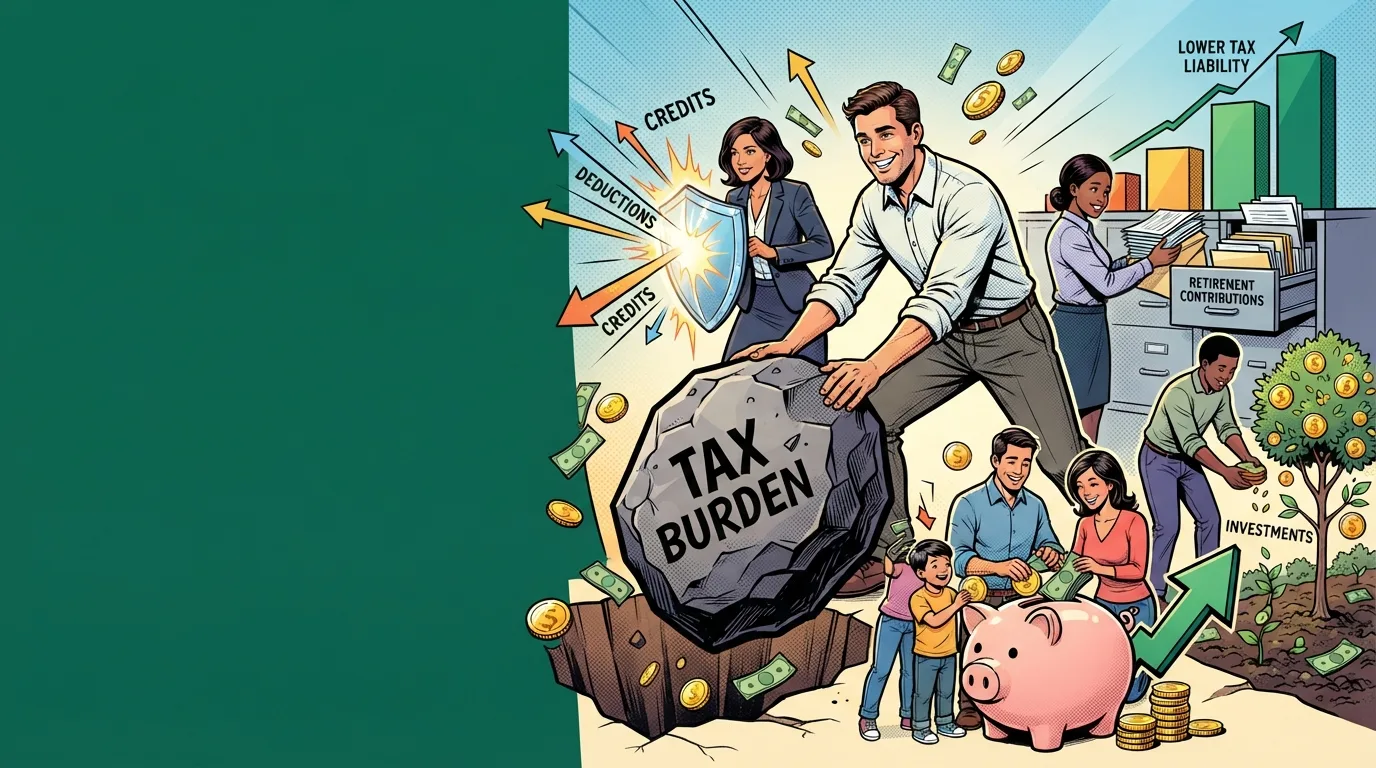
Filing a federal tax return for the first time can feel like opening a box of forms with no instructions. The good news is that the basic process is predictable: determine whether you must file, collect income and deduction records, choose the right filing status and form, complete the return, and submit it by the deadline. Most beginners can file accurately with free or low-cost tools, but the details matter. A missed W-2 or the wrong filing status can slow a refund or trigger an IRS notice. This guide explains how to file taxes for beginners in plain language, with practical checks, key IRS rules, and places to get help. It is educational information, not personalized tax advice; complex situations such as business income, major life changes, or IRS disputes call for a credentialed tax professional.
1. Confirm Whether You Need to File
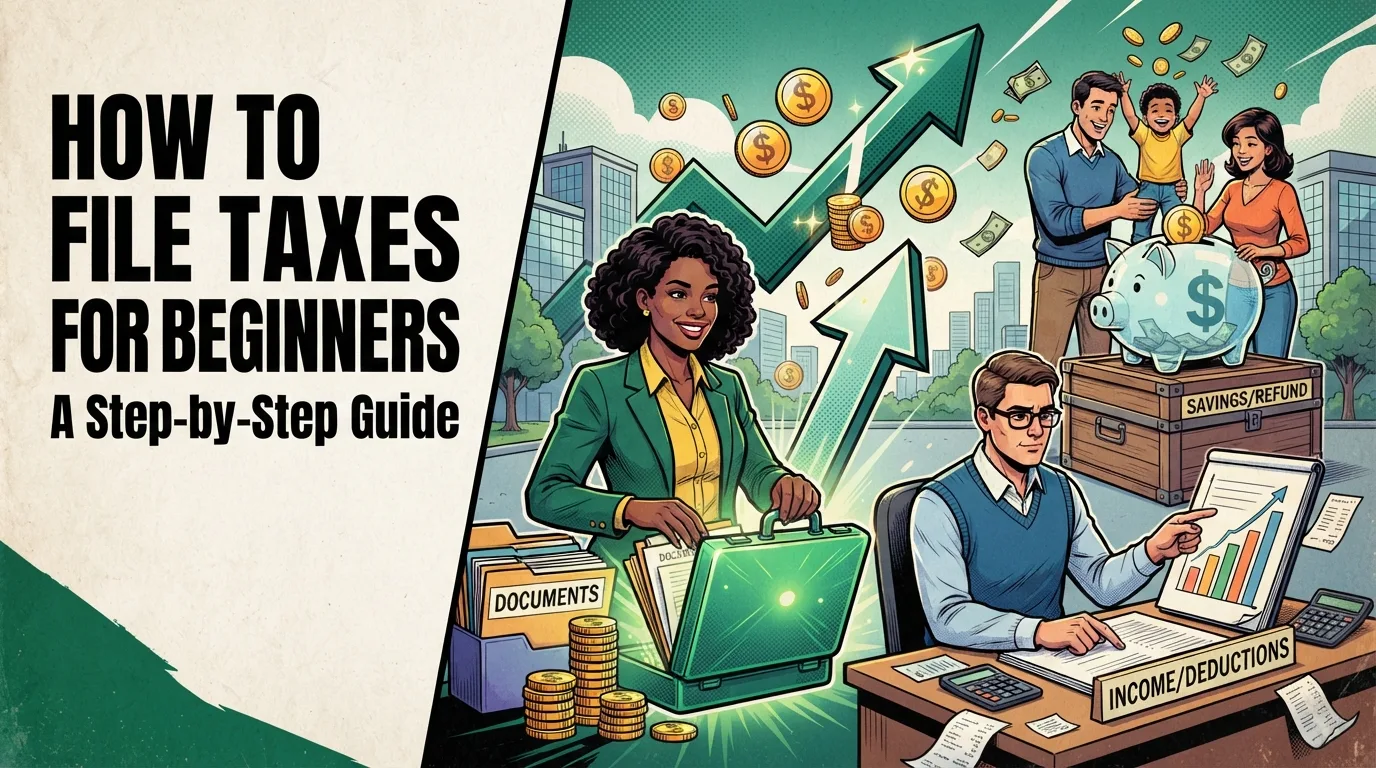
The IRS requires a federal return when gross income exceeds certain thresholds. Those thresholds depend on filing status, age, and whether someone can claim you as a dependent. For many employees, filing is worthwhile even when it is not strictly required, because withholding from a paycheck is the main way to recover overpaid federal income tax. Refundable credits, such as the Earned Income Tax Credit for eligible workers, can also make filing beneficial below the normal threshold.
Use the IRS Interactive Tax Assistant or the Form 1040 instructions to check your situation. Do not assume that a low income automatically means no filing requirement. Self-employment income, certain retirement distributions, marketplace health insurance credits, and special tax benefits can change the answer. If you are unsure, filing a correct return is usually simpler than correcting a missed filing later, but confirm the rules for your facts.
- You generally need records for every income source, including side gigs and freelance work.
- Filing can be beneficial if federal income tax was withheld or you qualify for refundable credits.
- Special rules apply to dependents, retirees, self-employed workers, and people with foreign income.
- A state return may be required even when no federal return is due.
2. Gather Your Tax Documents Before You Start
Start with a checklist and keep every form in one folder, digital or paper. Most beginners receive a W-2 from each employer. You may also receive 1099 forms for interest, dividends, freelance work, unemployment, retirement distributions, or miscellaneous income. Do not file before the forms arrive; waiting a few extra days is better than filing an incomplete return and needing to amend it.
Common documents include:
- W-2 for wages and salary.
- 1099-INT, 1099-DIV, and 1099-B for interest, dividends, and investment sales.
- 1099-NEC or 1099-MISC for freelance, contract, or gig work.
- 1099-R and SSA-1099 for retirement and Social Security income.
- 1098 for mortgage interest, 1098-E for student loan interest, and 1098-T for tuition.
- Records of charitable donations, medical expenses, estimated tax payments, and prior-year returns.
Compare your final pay stub with your W-2 to catch obvious errors in wages or withholding. If a form is missing, contact the issuer first. You can also view wage and income transcripts through your IRS online account, but transcripts may not include every state or local item.
3. Choose the Right Filing Status
Filing status affects your standard deduction, tax brackets, and eligibility for credits. The five statuses are single, married filing jointly, married filing separately, head of household, and qualifying surviving spouse. Head of household generally requires that you are unmarried or considered unmarried, paid more than half the cost of keeping up a home, and had a qualifying person live with you for more than half the year.
Married couples usually compare filing jointly with filing separately. Joint filing often provides larger benefits, but separate filing can occasionally help with liability concerns, income-driven student loan payments, or medical expense deductions. Do not choose a status simply because software defaults to it. Use the IRS What Is My Filing Status tool or the Form 1040 instructions if your situation is unclear.
If someone can claim you as a dependent, your standard deduction and credit eligibility may be limited. Answer the dependent questions accurately; this is one of the most common sources of beginner errors.
4. Select the Right Forms and Filing Method
Most individual filers use Form 1040. Additional schedules add detail when needed: Schedule 1 for extra income and adjustments, Schedule 2 for additional taxes, Schedule 3 for credits, Schedule A for itemized deductions, Schedule B for interest and dividends, Schedule C for self-employment, and Schedule D for capital gains. Tax software usually selects the schedules after you answer the interview questions.
Your filing method depends on complexity and comfort:
- IRS Free File offers guided software at no cost to taxpayers below an annual income threshold. Eligibility changes each year, so check the current IRS Free File page.
- Free fillable forms provide electronic federal forms without guided help. They suit simple returns and confident filers.
- Commercial tax software is useful for investments, rental income, self-employment, and multiple states. Paid tiers may be necessary for more complex returns.
- A CPA, Enrolled Agent, or tax attorney can help with business income, complex investments, multi-state issues, or IRS notices.
- Paper filing is the slowest option and has a higher error rate. Use it only when electronic filing is not possible.
Keep a copy of the return and all supporting documents. You may need them for a mortgage application, financial aid form, state return, or later IRS question.
5. Complete the Return in a Logical Order
Work through the return in the same order as the form. First enter personal information: legal name, Social Security number, address, and dependent details. Use the exact name and number printed on Social Security cards. Next report income from all sources, including wages, interest, dividends, business income, retirement distributions, unemployment compensation, and other taxable payments.
Then review adjustments to income, such as student loan interest, IRA contributions, health savings account contributions, and educator expenses. After that, choose the standard deduction or itemize. The IRS sets standard deduction amounts each year; for tax year 2025, the standard deduction is $15,000 for single filers and $30,000 for married couples filing jointly. Itemizing usually helps when mortgage interest, state and local taxes, charitable gifts, and qualifying medical expenses exceed the standard amount.
Credits come next. Credits reduce tax dollar for dollar and are more valuable than deductions. Common credits include the child tax credit, earned income tax credit, education credits, and child and dependent care credit. Some credits are refundable, meaning they can produce a refund even when you owe no tax. Claim only credits you qualify for; incorrect claims can delay processing and create repayment obligations.
Finally, enter federal income tax withheld, estimated tax payments, and any other payments. The return will calculate a refund or balance due. If you owe, you can pay by the deadline through IRS Direct Pay, the Electronic Federal Tax Payment System, or a card processor that charges a convenience fee.
6. Review, Submit, and Handle a Refund or Balance Due
Before submitting, review the return for accuracy. Check Social Security numbers, bank routing and account numbers, income totals, filing status, dependents, and credits. E-filing requires a self-selected PIN or prior-year adjusted gross income for identity verification. After e-filing, you can check status with the IRS Where's My Refund tool, typically after 24 hours. Paper returns take longer.
For calendar-year taxpayers, the federal return is generally due April 15 of the following year. If that date falls on a weekend or holiday, the deadline moves to the next business day. A filing extension such as Form 4868 generally moves the due date to October 15 for individuals, but it does not extend the time to pay. Filing an extension when you owe money can lead to penalties and interest unless you pay enough by the original deadline.
If you cannot pay the full balance, file on time and pay what you can. The IRS offers payment plans and other collection alternatives. Ignoring the balance generally makes the problem more expensive. State returns are separate and may have different deadlines, forms, and payment options.
7. Avoid Common Beginner Mistakes
Most beginner mistakes are avoidable with a careful review:
- Using the wrong filing status or claiming an ineligible dependent.
- Leaving out income from a side job, gig platform, or investment account.
- Transposing a Social Security number or bank account number.
- Forgetting a required state return.
- Filing before all corrected forms arrive.
- Claiming credits without meeting the eligibility rules.
- Ignoring an IRS notice instead of responding by the stated deadline.
- Failing to keep copies and supporting records.
Keep records generally for at least three years after filing or two years after paying the tax, whichever is later. Some situations require longer retention. If the IRS contacts you, respond promptly and keep the notice with your tax file.
Bottom Line
Filing taxes for beginners is manageable when you work in order: confirm whether you need to file, gather every document, choose the correct filing status, use reliable software or a qualified preparer, review the return carefully, and submit it by the deadline. Accuracy matters more than speed. If you are unsure about a credit, a filing status, or a notice, use IRS resources or ask a credentialed tax professional. If you owe and cannot pay, file on time and contact the IRS to discuss available options rather than waiting.