Mortgage rates can look like a single number quoted by a lender, but they are really a price. The rate is the annual cost of borrowing principal, and it reflects a chain of influences: bond-market yields, investor demand for mortgage-backed securities, the lender's costs and profit margin, and the risk characteristics of your loan. Understanding that chain makes it easier to compare offers, decide whether to pay points, and know when a rate lock makes sense. This guide explains how mortgage rates work in plain terms. Rate quotes change constantly, so the figures here are illustrative, not predictions.
What a Mortgage Rate Actually Prices
At its core, a mortgage rate is the interest rate a lender charges on the outstanding loan balance. It determines the principal-and-interest portion of your monthly payment. A higher rate raises the payment and the total interest paid over the life of the loan; a lower rate does the opposite. But the rate is not the same as the annual percentage rate, or APR. The note rate is used to calculate monthly principal and interest. The APR is a broader measure that includes certain lender fees, points, and other finance charges expressed as an annual rate. APR can help you compare similar loan offers, but it is not the rate you will see on your statement and it can be distorted by how long you keep the loan.
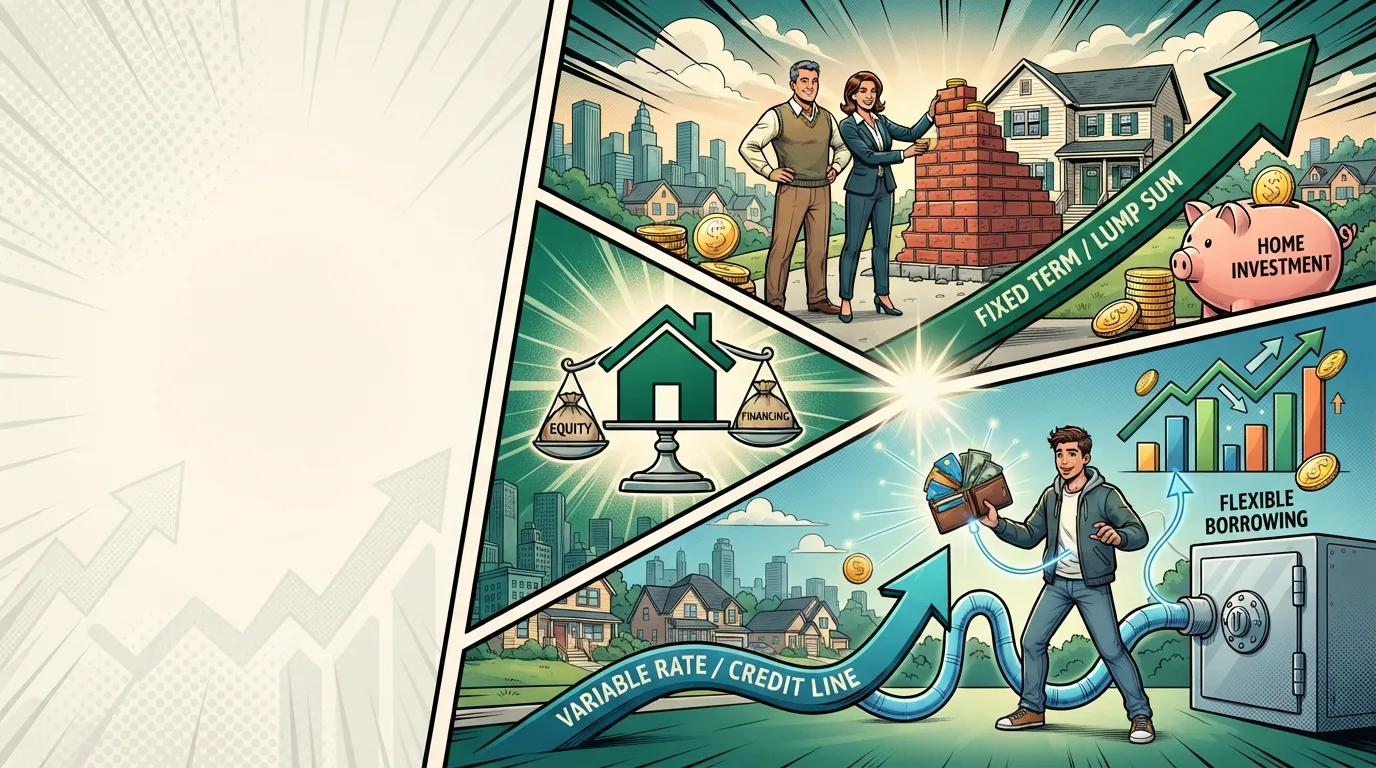
- Fixed-rate mortgage: the note rate stays the same for the full term, commonly 15 or 30 years. Principal and interest are predictable, though taxes and insurance can change.
- Adjustable-rate mortgage: the rate is fixed for an initial period, then adjusts periodically based on an index plus a margin. Caps limit how much it can change at each adjustment and over the life of the loan.
- Lender pricing: the rate also includes the lender's cost of funds, operating costs, and profit margin. Two lenders can quote different rates on the same day because their pricing and capacity differ.
- Secondary market: many lenders sell loans to investors, and the pricing of those loans is tied to secondary-market yields. When investors demand higher yields for mortgage-backed securities relative to safer bonds, mortgage rates tend to rise.
The Market Forces That Move Mortgage Rates
Mortgage rates are influenced by the same broad forces that move other long-term interest rates, plus factors specific to housing finance.
- Inflation and expectations: when inflation is high or expected to rise, investors demand higher yields to preserve purchasing power. That tends to push mortgage rates higher. When inflation cools, rate pressure can ease, though other factors may offset it.
- Federal Reserve policy: the Fed does not set 30-year fixed mortgage rates directly. It influences short-term interest rates and financial conditions, and its purchases or sales of mortgage-backed securities can affect mortgage spreads. Fed decisions can move rates indirectly and sometimes quickly, but the connection is not mechanical.
- Treasury yields: the 10-year Treasury yield is a common benchmark for long-term borrowing costs. Mortgage rates often move in the same direction, but the gap between Treasury yields and mortgage rates—the spread—varies with investor demand, supply, and risk.
- Mortgage-backed securities supply and demand: investors who buy agency mortgage-backed securities compete with Treasuries and corporate bonds. Heavy issuance or reduced demand can widen spreads and raise consumer rates.
- Lender capacity and competition: when lenders are busy, they may price less aggressively. When demand is weak, pricing can improve. This is one reason two lenders can offer different rates even when market yields are identical.
- Global demand: in periods of global uncertainty, investors may seek U.S. government and agency debt as a safe haven. That can affect yields and mortgage pricing, though the effect is not one-directional.
Freddie Mac's Primary Mortgage Market Survey is a widely followed weekly average of rates for conforming loans. It is useful for tracking trends, not for locking a specific loan. Your offered rate depends on your borrower profile, property, loan terms, and the lender.
How Lenders Price Your Specific Loan
After the market sets a baseline, lenders adjust pricing for risk and cost. The adjustments can appear as a higher rate, higher fees, or both.
- Credit score and credit history: borrowers with higher scores generally receive better pricing because they have shown a lower statistical likelihood of default. Lower scores may lead to a higher rate, more fees, or both. A single late payment or high credit utilization can matter, so review your reports before applying.
- Loan-to-value ratio and down payment: a larger down payment reduces the lender's exposure. Loans with a down payment below 20% often require private mortgage insurance, which adds to the monthly cost even though it is not part of the interest rate.
- Debt-to-income ratio and reserves: lenders compare monthly debt payments with gross income. A lower DTI and documented cash reserves can improve pricing or eligibility. Approval is not assured; it depends on income, assets, credit, and the property.
- Loan amount and loan type: conforming loans that meet agency limits are often priced differently from jumbo loans. Government-backed loans such as FHA, VA, and USDA loans have their own fee structures and underwriting rules.
- Property and occupancy: primary residences usually receive better pricing than second homes or investment properties. Condos, multi-unit buildings, and unusual properties can carry additional pricing adjustments.
- Discount points: a point is an upfront fee equal to 1% of the loan amount. Paying points can lower the note rate. The trade-off is a break-even calculation: divide the cost of the points by the monthly savings. If you plan to keep the loan longer than the break-even period, points may make sense; if you may refinance or sell soon, they may not.
- Lender fees and margins: origination fees, underwriting fees, and other charges vary by lender. A lower rate with high fees can cost more than a slightly higher rate with low fees. Compare the Loan Estimate, not just the advertised rate.
Fixed vs Adjustable Rates: How the Math Works
A fixed-rate mortgage has one note rate for the entire term. The main advantage is predictability: the principal-and-interest payment does not change. The trade-off is that fixed rates may be higher than the initial rate on an adjustable-rate mortgage.
- A 5/1 ARM, for example, has a fixed rate for five years and then adjusts once per year. The adjustment is based on an index plus a margin, subject to caps.
- ARMs can be useful for borrowers who expect to sell or refinance before the fixed period ends, but they carry risk. If the rate rises after the fixed period, the payment can increase.
- Ask for the fully indexed rate, the margin, the initial adjustment cap, the periodic cap, and the lifetime cap. A low introductory rate is not the whole story.
Rate Locks and Float-Down Decisions
A rate lock is a lender's commitment to hold a specific rate for a set period, usually until closing. Locks protect you if rates rise, but they can cost more for longer terms and may include a fee. A lock does not assure approval; underwriting and property conditions still apply.
- Lock length should match your expected closing date. If closing is delayed beyond the lock period, you may need an extension, which can carry a cost.
- Floating means you accept market movement. You may get a lower rate if rates fall, or a higher rate if they rise.
- Some lenders offer a float-down option if rates improve before closing. Terms vary, and the feature may cost extra.
- Get the lock terms in writing: the rate, expiration date, extension policy, and whether the lock includes points or fees.
How to Compare Mortgage Offers Like a Professional
Comparing mortgage offers is not just a rate contest. The best offer depends on total cost, loan features, and your timeline.
- Request Loan Estimates from at least three lenders for the same loan amount, term, and type. A Loan Estimate uses standardized disclosures, making side-by-side comparison easier.
- Compare the note rate, APR, origination charges, points, and third-party fees. Ask which fees are lender-controlled and which are estimates.
- Calculate the monthly principal-and-interest payment and the break-even on points. Include mortgage insurance, taxes, and homeowners insurance in your budget.
- Ask about prepayment penalties, late fees, and whether the loan has a balloon payment. These features are less common on standard mortgages but still worth confirming.
- Consider the lender's service and closing timeline. A slightly lower rate is not useful if the lender cannot close on time or communicate clearly.
On a $300,000 30-year fixed loan, a 6.0% rate produces a principal-and-interest payment of about $1,799. At 6.5%, the payment is about $1,896—roughly $98 more per month. Over 30 years, the higher rate can add more than $35,000 in interest. The figures are illustrative and exclude taxes, insurance, mortgage insurance, and fees.
APR can help, but it has limits. Because APR spreads certain costs over the assumed loan term, it may favor one loan over another depending on how long you keep the mortgage. Use APR as one comparison tool alongside the Loan Estimate and your own break-even analysis.
How Mortgage Rates Interact With Refinancing
A refinance replaces your current mortgage with a new one. A lower rate can reduce the monthly payment and total interest, but refinancing has closing costs. The break-even point is the number of months it takes for the monthly savings to exceed those costs.
- If you plan to stay in the home beyond the break-even period, a refinance may be worth evaluating.
- If you may move soon, the closing costs may outweigh the savings.
- A rate-and-term refinance changes the rate, term, or both. A cash-out refinance replaces the mortgage with a larger loan and gives you the difference in cash, which increases the balance and risk.
Refinancing is not automatically beneficial just because rates have fallen. Compare the new Loan Estimate with your current loan terms, remaining balance, and how long you expect to keep the home.
Common Misconceptions About Mortgage Rates
- The Fed sets mortgage rates. The Fed influences short-term rates and mortgage-backed securities demand, but 30-year fixed rates are set by the market and lender pricing. Fed actions matter, but they are not a direct dial.
- The lowest advertised rate is the best deal. Advertised rates may assume a high credit score, a large down payment, and points. The actual offer depends on your profile.
- APR is always the right number to compare. APR is useful, but it is not the payment and it depends on assumptions. Compare APR, fees, and the note rate together.
- Rates are the same for every borrower. Pricing adjusts for credit, loan-to-value, occupancy, property type, and loan amount.
- Waiting for the perfect rate is free. Waiting can bring a better rate, but it can also bring a worse one, and it may extend your timeline or lock period. Decide based on your budget and closing needs.
Bottom Line
Mortgage rates work as a market price for long-term money, adjusted for lender costs and borrower risk. Inflation, Federal Reserve policy, Treasury yields, mortgage-backed securities demand, and lender competition all feed into the baseline. Your credit, down payment, debt-to-income ratio, property, and loan features determine the final offer. Compare Loan Estimates from multiple lenders, look at APR and fees together, and ask how points and rate locks affect total cost. Rates change daily, so a quote is a snapshot, not a promise. The right rate is the one that fits your budget, timeline, and tolerance for risk—not simply the lowest number advertised.